
Alkylresorcinols: what they are and why rye bran has the most.
Alkylresorcinols are naturally occurring plant compounds found almost entirely in the outer layers of rye and wheat. Rye bran carries the highest concentration of any common cereal. Researchers use one of them, C17:0, as a marker in blood plasma to verify whether people are genuinely eating wholegrain rye, which is why the profile is sometimes called a nutritional fingerprint.
Educational summary of published research · Not health claims made by Ryedical
See what's in each tablespoon
What alkylresorcinols are
Alkylresorcinols (often shortened to ARs) are phenolic lipids: naturally occurring plant compounds that the rye plant produces in the outer layers of its grain. They are not added, isolated, or manufactured. They are simply part of what the bran is.
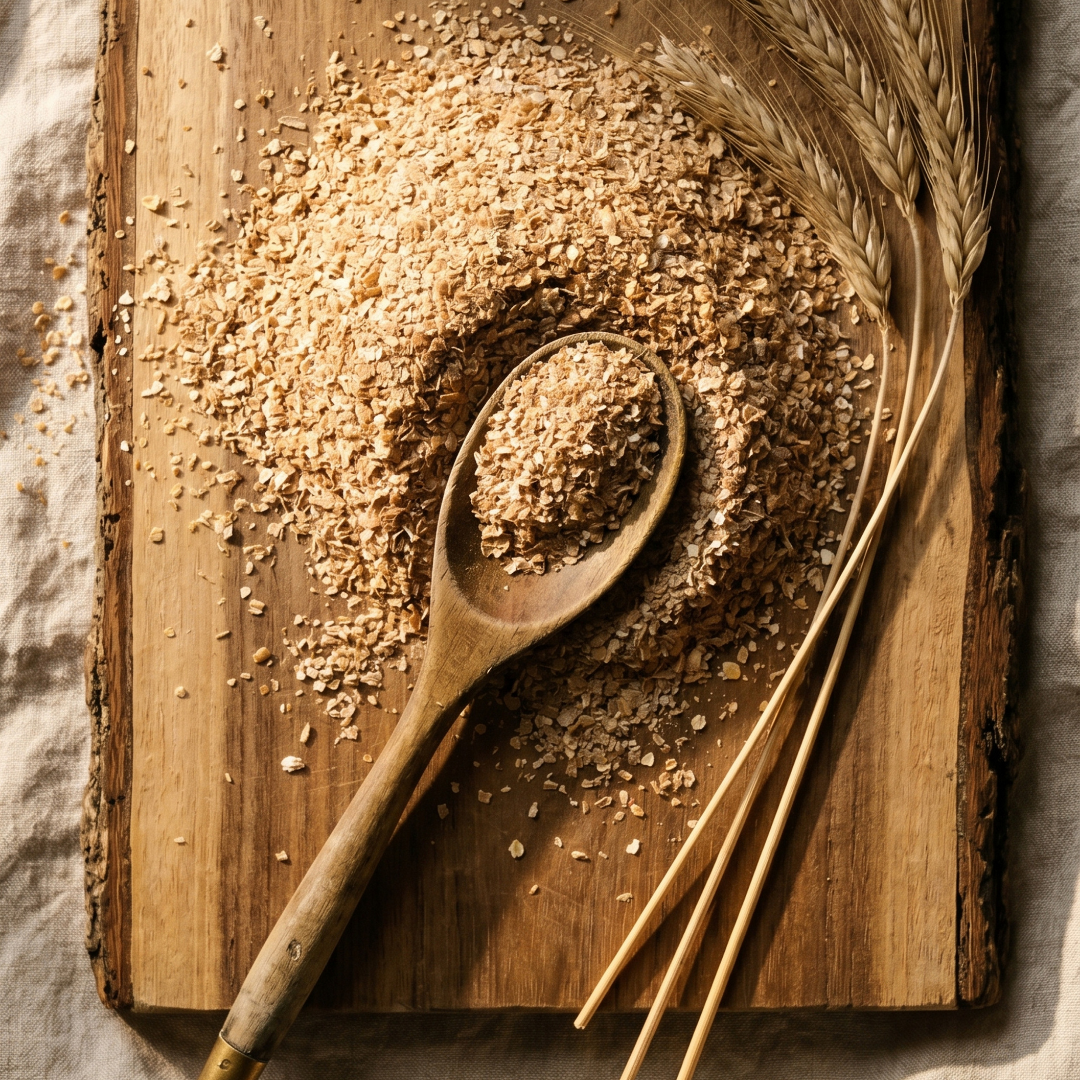
They occur in meaningful amounts in only two common cereals, rye and wheat, and they concentrate almost entirely in the bran layer rather than the starchy centre. Oats and rice contain essentially none. This matters for a practical reason: when a mill separates bran from flour, the alkylresorcinols leave with the bran. White flour has almost none of them.
Individual alkylresorcinols are named for the length of their carbon chain: C17:0, C19:0, C21:0, C23:0, and C25:0. The ratio between those chain lengths differs by grain, and that difference is what makes them useful to researchers.
The C17:0 fingerprint: why researchers care
Nutrition research has a persistent problem: people are unreliable narrators of their own diets. Asking someone how much wholegrain they eat produces an estimate, not a measurement.
Alkylresorcinols solved part of that problem. Because they survive digestion, are absorbed, and appear in blood plasma, they can be measured objectively. And because rye and wheat carry different chain-length ratios, the ratio in a person's plasma indicates not just that they ate wholegrain, but which grain. Rye is comparatively rich in C17:0; wheat is not. A higher C17:0 signal points to rye.
That is what the phrase "nutritional fingerprint" refers to. It is a marker of intake used to validate dietary studies. It is not, in itself, a claim about health outcomes.
Why rye bran carries the most
Rye bran holds the highest alkylresorcinol concentration of any common cereal bran. Wheat bran contains them at lower levels and in a different chain-length profile. Oat bran and rice bran contain essentially none.
Alkylresorcinols also travel in company. The same bran layer carries rye's other naturally occurring compounds: plant lignans (rye is among the richest food sources after flaxseed), ferulic acid bound to the fibre itself, and tocotrienols, the rarer and more bioactive form of vitamin E. Alongside them sit rye's three prebiotic fibres: arabinoxylan, beta-glucan, and fructans. No other single wholefood contains all three naturally.
This is the argument for eating the bran rather than an isolated extract. Whatever role these compounds play, they occur together, in the proportions the grain grew them in.
Why processing temperature decides what survives
Here is the part most bran packaging never mentions. Alkylresorcinols and the compounds beside them are sensitive to how the grain is handled. Heat and long processing times reduce what the bran retains, and much of the bran sold in Australia is a by-product of flour milling: heat-treated for milling efficiency and shelf stability, because the flour was the point and the bran was the leftover.
Cold-processing is the opposite decision. Ryedical's bran is processed under 45°C specifically so that the compounds the grain grew stay in the bran that reaches your kitchen. It is slower, it runs in smaller batches, and it costs more per kilogram. That is the entire reason it exists.
The practical implication: buying rye bran for its alkylresorcinols only makes sense if they are still in there when you eat it.
The research series
Kevin has spent years reading the published literature on rye bran and its compounds. These six articles are educational summaries of that research, written for people who want the detail rather than the headline. They summarise published studies; they are not health claims made by Ryedical.
- Digestion resistance — how the digestion-resistant structure of rye bran governs the way alkylresorcinols, including AR C17, are released and absorbed through intestinal cells. Start here: it explains how the compounds get anywhere at all.
- Mitochondrial membrane integrity — research on rye bran, mitochondrial membranes, and prolonged cellular health.
- Essential membrane potential — inner mitochondrial membrane potential, AR C17, and cellular health.
- Rye bran and mitochondrial health — studies on how AR-C17 relates to mitochondrial membranes, oxidative stress, and energy production.
- Rye bran and healthy cell death — studies on apoptosis: how cells that should self-destruct do, and healthy ones are protected.
- Exercise, cell death, and muscle — how intense exercise stresses muscle, how moderate exercise protects it, and where rye bran sits in the research.
ONE BAG. EVERYTHING IN THE GRAIN.
What's actually inside.
- 1 One ingredient. Nothing added.
- 2 Both soluble and insoluble fibre
- 3 Prebiotic fibres — fructans, beta-glucan, arabinoxylan
- 5g Dietary fibre per tablespoon (13g serve)
- Vit E The rarer tocotrienol form, plus rye alkylresorcinols
Alkylresorcinols, answered.
-
Alkylresorcinols are naturally occurring plant compounds (phenolic lipids) found almost entirely in the outer layers of rye and wheat grains. They are produced by the plant itself and concentrate in the bran layer rather than the starchy centre. Rye bran carries the highest concentration of any common cereal.
-
Only rye and wheat contain them in meaningful amounts, and almost all of it sits in the bran. Rye bran has the highest concentration, followed by wheat bran. Oats and rice contain essentially none. Refined white flour has almost none, because the bran layer is milled away.
-
C17:0 is one alkylresorcinol, named for its 17-carbon chain. Because alkylresorcinols survive digestion and can be measured in blood plasma, and because rye and wheat carry different chain-length ratios, researchers use the ratio as an objective marker of whether someone has actually eaten wholegrain rye rather than relying on self-reported diet. That marker role is what "nutritional fingerprint" refers to.
-
Yes. Like many naturally occurring compounds in food, alkylresorcinols are sensitive to how the grain is handled, and heat and longer processing times reduce what the bran retains. Most commercial bran is a heat-treated by-product of flour milling. Ryedical is cold-processed under 45°C specifically to preserve what the grain came with.
-
Eat the bran layer of rye or wheat rather than refined flour. Wholegrain rye bread contributes some; rye bran itself is the most concentrated food source. One tablespoon (13g) of Ryedical is one serve, used cold or at room temperature, and we recommend 1.5 to 2 serves a day as part of a balanced diet.
-
No. Rye bran contains gluten and is not suitable for people with coeliac disease or non-coeliac gluten sensitivity. Rye also contains naturally occurring FODMAPs, so if you have IBS or follow a low-FODMAP diet, introduce it slowly. Speak with your healthcare professional about your specific needs.
